“The quality of our feedback is only as good as the quality of our observations.”
Think about the last resident evaluation you completed. How much of your assessment was based on what you personally observed versus what you inferred from chart review, conversations with colleagues, or your overall impression of the learner?
In the fast pace of clinical practice, it’s easy to rely on assumptions. We see residents consistently performing well and conclude they’re excellent communicators. We hear a polished patient presentation and assume they gathered a thorough history. We complete milestone evaluations based on a collection of moments rather than intentional observation.
The challenge is simple: we can’t accurately assess what we haven’t seen.
Direct observation is one of the most valuable tools we have as clinical educators—not because it helps us complete evaluations, but because it helps us become better coaches.
Observation Is Coaching in Action
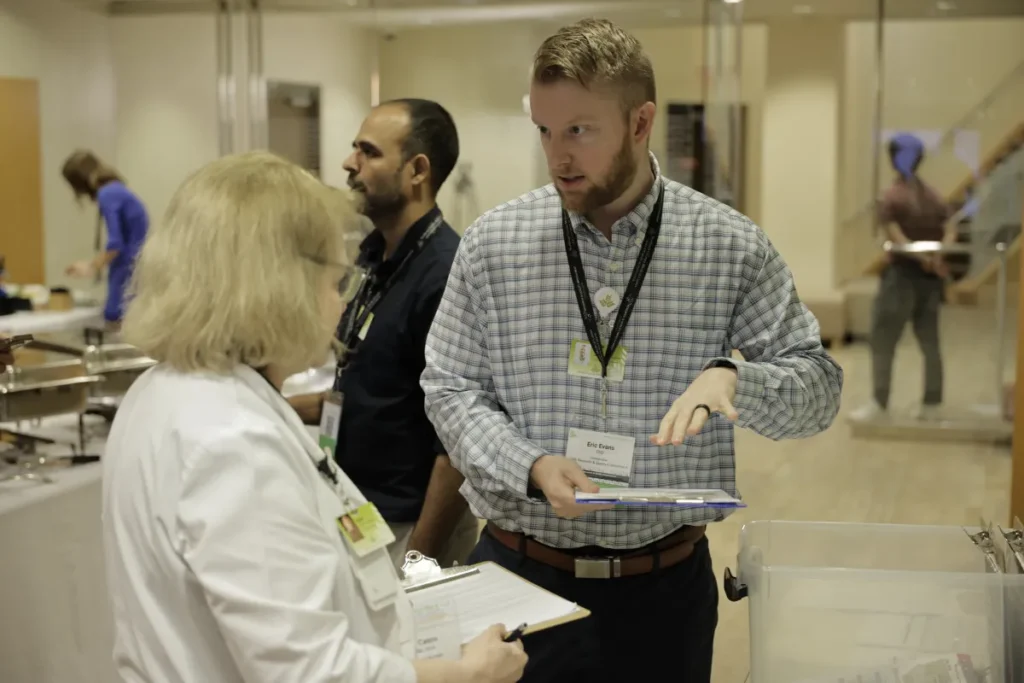
Many faculty members associate direct observation with formal assessments, checklists, or scheduled evaluation encounters. While those certainly have their place, the most impactful observations often happen during everyday clinical work.
A few intentional minutes spent watching a resident can reveal far more than an end-of-rotation evaluation ever could.
Observe how they:
- Introduce themselves to a patient.
- Gather a focused history.
- Perform a physical examination.
- Explain a diagnosis or treatment plan.
- Deliver an oral presentation.
- Navigate uncertainty.
- Communicate with consultants or nurses.
- Teach a medical student.
These moments provide rich insight into clinical reasoning, communication, professionalism, and patient-centered care—competencies that are difficult to judge from documentation alone.
Shift from Judging to Noticing
One of the most important mindset shifts in direct observation is moving away from asking, “How did they do?” and toward asking, “What did I notice?”
Specific observations lead to meaningful coaching.
Instead of saying:
“You need to improve your communication.”
Try:
“I noticed you maintained eye contact with the patient, but after explaining the treatment plan, you didn’t pause to check for the patient’s understanding.”
Instead of:
“Your presentation needs work.”
Try:
“You presented the diagnostic data clearly, but your assessment didn’t explain why pulmonary embolism moved lower on your differential after the CT results.”
When feedback is grounded in observed behaviors, residents understand exactly what to continue and what to improve.
Small Observations Have Big Impact
Faculty often worry that they don’t have time for direct observation.
The good news? You don’t need to observe an entire patient encounter.
Choose one skill and watch it intentionally.
Today, observe:
- The first two minutes of a patient encounter.
- How a resident closes a visit.
- Their handoff to another provider.
- Their oral case presentation.
- One difficult conversation.
Five focused minutes often generate more actionable coaching than trying to observe everything all at once.
Observation Should Lead to Conversation
Observation alone doesn’t improve performance.
Learning happens during the conversation that follows.
A brief coaching discussion can be as simple as asking:
- What do you think went well?
- What challenged you during that encounter?
- May I share one thing I noticed that was particularly effective?
- What’s one thing you’ll try differently next time?
These conversations don’t have to be lengthy. Even a two-minute debrief reinforces strengths, promotes reflection, and identifies one meaningful opportunity for growth.
Making Direct Observation Routine
The strongest educational cultures don’t reserve observation for struggling learners or end-of-rotation evaluations.
They normalize it.
When residents know they will be observed regularly, observation becomes expected rather than intimidating. It shifts from feeling like an inspection to becoming a routine part of coaching and professional growth.
Likewise, faculty gain greater confidence that milestone ratings and narrative evaluations are based on firsthand evidence rather than memory or assumption.
Over time, frequent, low-stakes observation creates something even more valuable than better evaluations, it creates better educators.
Faculty Development Takeaway
Before completing your next resident evaluation, pause and ask yourself:
“What did I personally observe?”
If the answer is “not much,” consider creating one intentional observation opportunity during your next clinical shift.
The best feedback begins with what we actually see.
Faculty Development Quick Tip
The Five-Minute Observation Challenge
On your next clinical shift, intentionally observe one resident for just five focused minutes while they:
- Present a patient.
- Counsel a patient or family.
- Perform a procedure.
- Conduct a bedside encounter.
Then provide:
- One reinforcing observation (“Here’s something you did well…”)
- One coaching point (“Here’s one thing to try next time…”)
Small, focused observations often produce the most meaningful coaching conversations—and the strongest evidence for future assessments.
Continue Your Learning
Ready to strengthen your assessment and feedback skills? Continue building your expertise through these Faculty Development opportunities.
Foundations of Assessment Webinar Series
Develop a stronger understanding of competency-based assessment through this practical webinar series. Sessions explore topics such as direct observation, feedback, psychological safety, writing meaningful evaluations, and understanding milestones. Whether you’re new to teaching or an experienced educator, each webinar provides evidence-informed strategies you can immediately apply in the clinical learning environment.
Direct Observation and Feedback Microcredential
Take a deeper dive into one of the most impactful skills in medical education. This self-paced microcredentialhelps faculty develop purposeful observation skills, deliver meaningful feedback, and confidently assess learner performance through everyday coaching conversations. Participants will gain practical tools, reflection exercises, and strategies that can be implemented on their very next clinical shift.
Visit the Faculty Development webpage to register for upcoming webinars, enroll in the microcredential, and explore additional resources designed to support your growth as a clinical educator.