
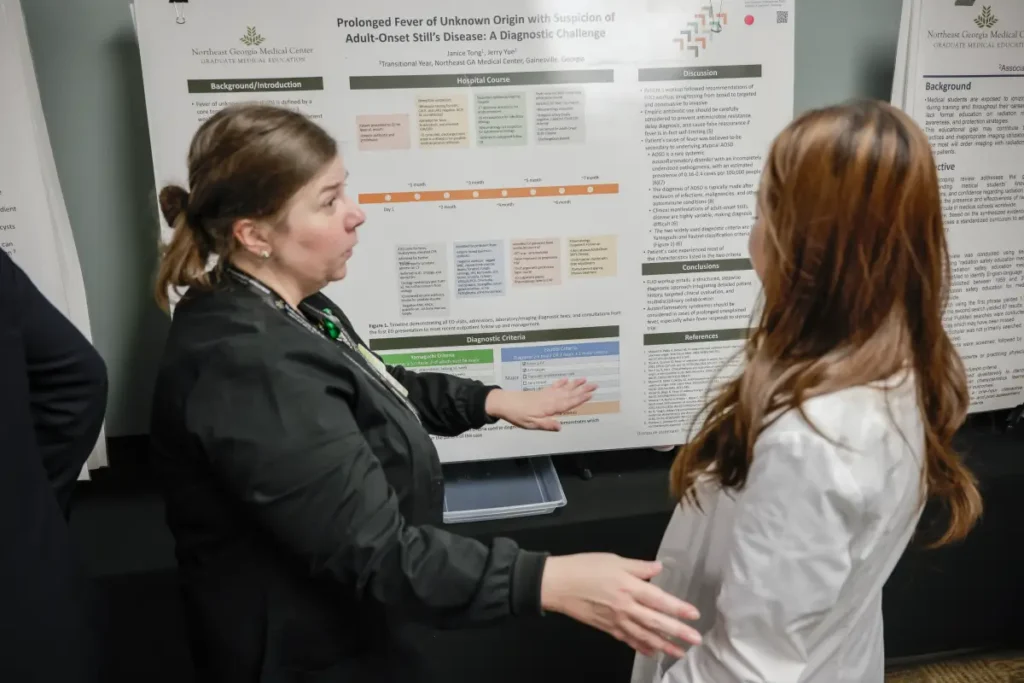
“Good job.”
We have all said it. It is positive, encouraging, and usually well-intentioned.
But is it feedback?
Not quite.
High-quality feedback does more than tell learners whether they performed well or poorly. It helps them understand what they did, why it mattered, and what they should do next.
When feedback is clear, timely, specific, and actionable, everyday clinical experiences become opportunities for learning and improvement.
The challenge for faculty is not necessarily recognizing when a resident performed well or struggled. The challenge is translating that observation into language that helps the learner grow.
From Observation to Action
Effective feedback starts with something you observed.
Compare: “You did a great job managing that patient.”
with: “You recognized that the patient was becoming unstable, prioritized them quickly, and clearly delegated roles to the team. That helped the team respond efficiently.”
The second statement tells the learner exactly what behavior was effective—and gives them something they can intentionally repeat.
A simple way to think about effective feedback is:
Observation → Impact → Next Step
Ask yourself:
- What did I see or hear?
- What was the impact of that behavior?
- What should the learner continue, change, or try next time?
Feedback becomes much more useful when we move away from evaluating the person and describing the behavior.
Instead of: “You’re a strong communicator.”
Try: “You paused after explaining the treatment plan and asked the patient to explain it back to you. That allowed you to identify a misunderstanding before ending the encounter.”
Now the learner knows what effective communication looks like and what behavior to repeat.
Two Frameworks to Make Feedback Easier
Faculty do not need lengthy conversations or complicated models to provide meaningful feedback. Two simple frameworks can make feedback easier to incorporate into everyday clinical teaching.
ADAPT
ADAPT provides a structure for moving from observation to a specific plan for continued development.
| Step | What to Do | Example |
| A – Ask | Invite the learner to reflect. | “How do you think that encounter went?” |
| D – Describe | Describe the behavior you observed without judgment. | “I noticed that you presented your assessment before clearly identifying the patient’s primary problem.” |
| A – Assess | Explain why the behavior was effective or needs adjustment. | “That made it difficult for the team to identify which issue needed to be addressed first.” |
| P – Plan | Identify a specific strategy for next time. | “Start your next presentation with a one-sentence problem representation.” |
| T – Track | Create an opportunity to practice and revisit the behavior. | “I’ll listen for that during rounds tomorrow, and we’ll check in afterward.” |
The Track step is especially important. Feedback becomes more powerful when learners have an opportunity to practice, receive feedback, and demonstrate growth.
Ask-Tell-Ask
Ask-Tell-Ask is particularly useful when you want to keep feedback conversational and encourage learner reflection.
| Step | Purpose | Example |
| ASK | Start with the learner’s perspective. | “What do you think went well? What would you do differently?” |
| TELL | Share your specific, behavior-based observations. | “I noticed that when you did X, the result was Y.” |
| ASK | Engage the learner in identifying the next step. | “What might you try differently next time?” |
Asking learners to self-assess does not mean faculty should avoid giving their own assessment. Learners need both: an opportunity to reflect and an expert perspective on their performance.
Common Feedback Mistakes
Even experienced educators can fall into feedback habits that limit learning.
Too vague: “Good job today.”
Try: “You prioritized the unstable patient quickly—that improved team flow.”
Focused on personality: “You need to be more confident.”
Try: “During your presentation, you frequently looked to me before making a recommendation. On the next patient, commit to your assessment and proposed plan before asking for input.”
No next step: “You need to improve your presentations.”
Try: “For your next three presentations, start with a one-sentence problem representation and then give your prioritized assessment.”
Behavior-Based Language: Describe What You Can See
One of the simplest ways to improve feedback is to replace labels with observations.
Instead of: “You were unprofessional.”
Try: “You interrupted the nurse several times while she was providing information about the patient. That made it difficult for the team to hear her concerns.”
Instead of: “You weren’t prepared.”
Try: “When I asked about the patient’s overnight events, you had not reviewed the nursing notes or updated laboratory results. Before rounds tomorrow, review both so you can incorporate those changes into your assessment.”
Behavior-based language makes feedback clearer, fairer, and more actionable.
It shifts the conversation from: “This is who you are.”
to: “This is what I observed, and this is what you can do differently.”
That distinction matters.
Simulation: Practice the Feedback Conversation
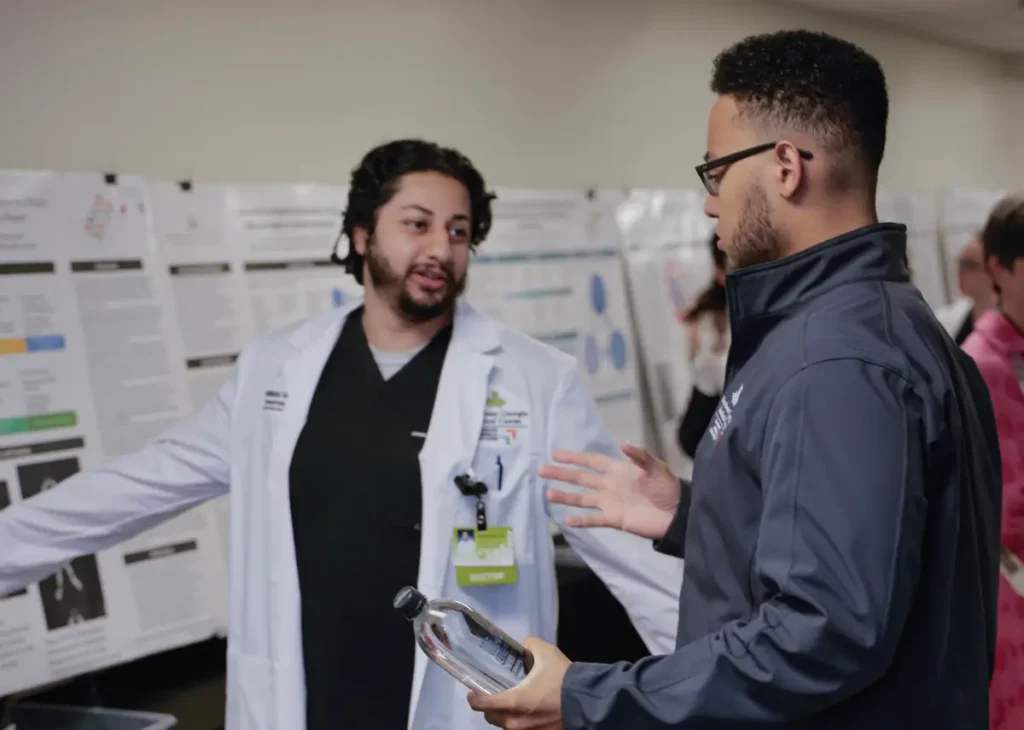
We routinely use simulation to help learners practice clinical skills before those skills are needed in higher-stakes situations. Why not use the same approach to strengthen our skills as educators?
Try this brief simulation during a faculty meeting or development session:
Scenario: A resident appropriately recognizes a deteriorating patient but communicates instructions to the team in a rushed and disorganized manner.
One faculty member plays the educator, and another plays the resident. The educator has two minutes to provide feedback using either ADAPT or Ask-Tell-Ask.
Then debrief:
- Was the feedback based on observable behavior?
- Was it specific?
- Was the impact of the behavior explained?
- Did the learner have an opportunity to reflect?
- Was there a clear next step?
Then switch roles and try again.
As faculty become more comfortable, practice increasingly challenging situations: reinforcing excellent performance, correcting clinical reasoning errors, addressing professionalism concerns, or giving feedback to a defensive learner.
Simulation allows faculty to practice not just what to say, but how to say it. Giving effective feedback is a skill—and like any other skill, it improves with deliberate practice.
Try It Tomorrow
Great feedback does not require a scheduled meeting or a 20-minute conversation. Some of the most valuable feedback happens in 60 seconds after an ordinary clinical interaction.
Tomorrow, turn one routine teaching interaction into a meaningful feedback moment:
1. Name what you observed.
“I noticed that you…”
2. Explain why it mattered.
“That was effective because…” or “The impact of that was…”
3. Identify what comes next.
“Next time, try…” or “Keep doing this when…”
The goal isn’t to give more feedback. The goal is to give feedback that is clearer, timelier, and more actionable.
Because when learners know what worked, why it worked, and what to do next, feedback becomes more than a comment on past performance.
It becomes a tool for their next performance.